Baradari Pavilions
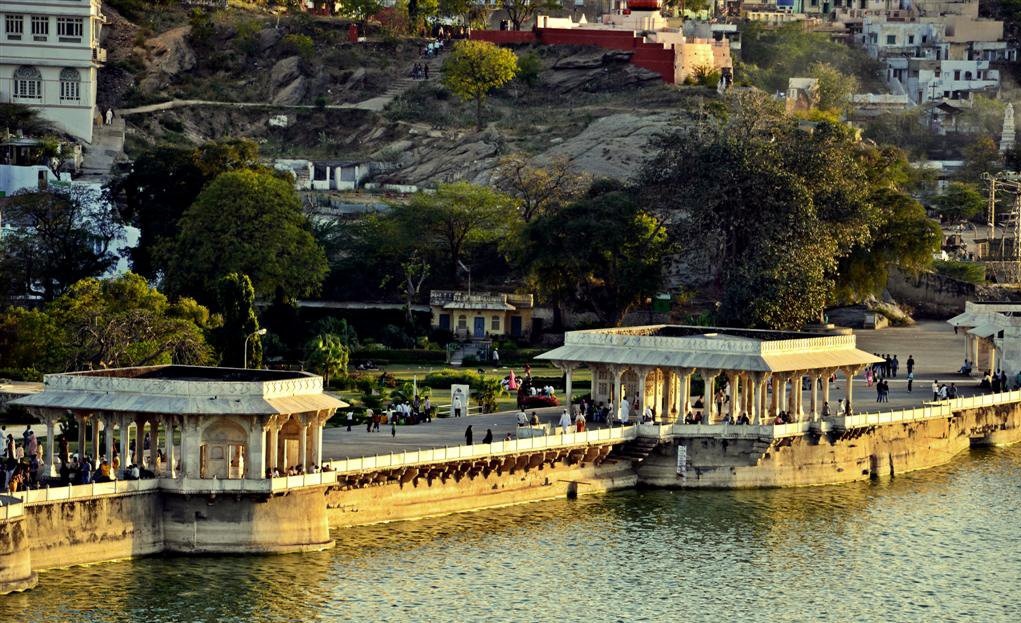
Five graceful pavilions built by Shah Jahan between Daulat Bagh and the lake. Their arched colonnades frame the water perfectly — a favourite spot for photography and quiet reflection.
A 12th-century royal lake of the Chauhan dynasty
Built by Arnoraja — known as Ana — grandfather of the legendary Prithviraj Chauhan, this shimmering artificial lake is the largest in Ajmer and the soul of the city's heritage.
 Royal Heritage
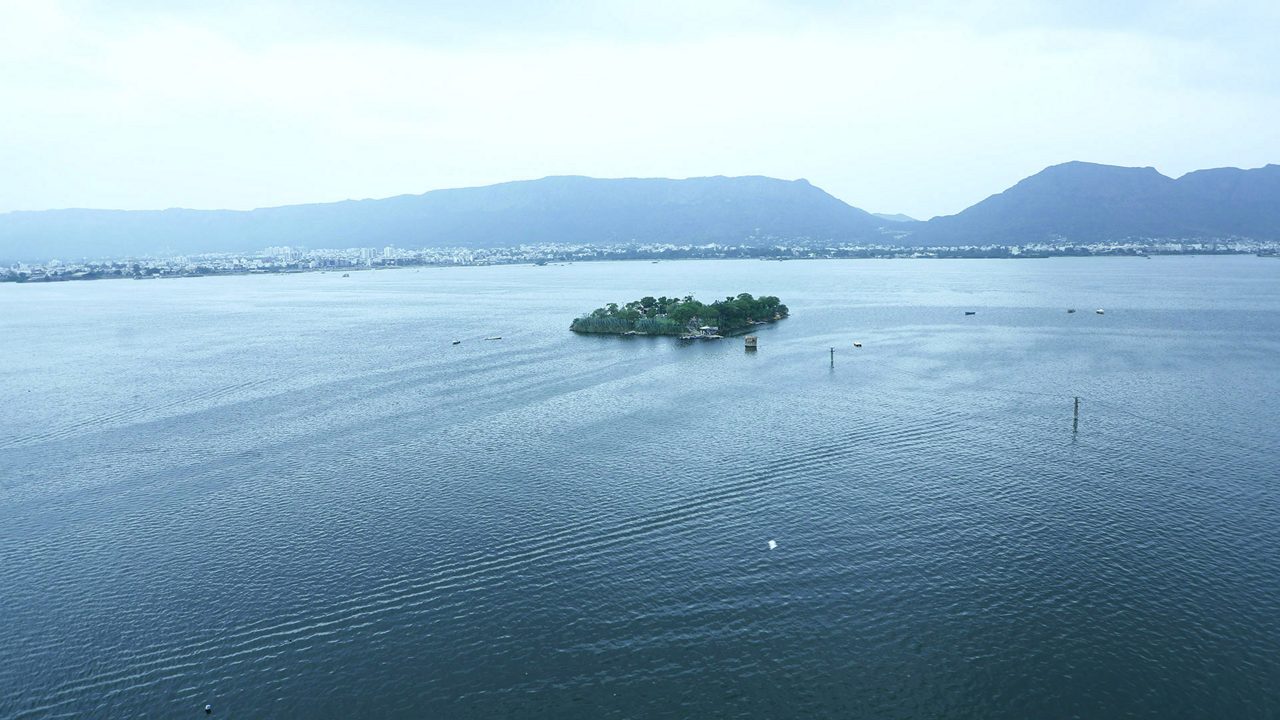
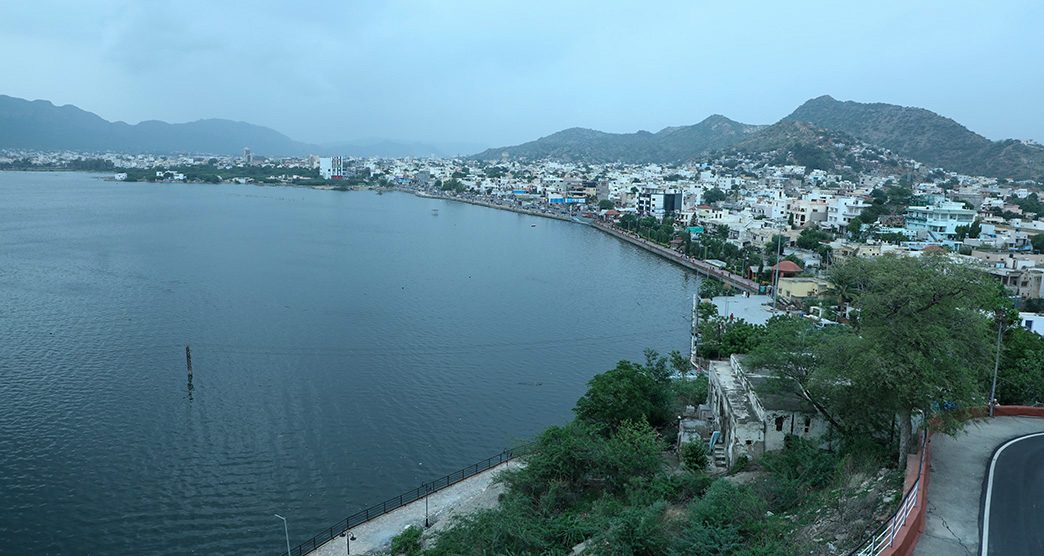
Ana Sagar Lake is an artificial lake set against the Aravalli hills in the city of Ajmer. It was commissioned by Arnoraja (alias Ana), a Chauhan king of the Shakambhari dynasty, between 1135 and 1150 AD — and named in his honour. Its catchments were raised with the help of the local populace.
Over the centuries the lake grew into a Mughal-era pleasure resort: Jahangir laid out the Daulat Bagh gardens beside the water, while Shah Jahan added the five arched pavilions known as the Baradari between the garden and the lake.
The story of Ana Sagar begins with a crushing victory and a king's vow to purify the land with water.
Arnoraja (Ana), son of Ajayaraja II, becomes king of the Chahamanas of Shakambhari. Inscriptions honour him with the titles Maharajadhiraja-Parameshvara and Paramabhattaraka Maharajadhiraja Shrimad Arnorajadeva.
Early in his reign Arnoraja inflicted a crushing defeat upon the invading Turushka (Turkic) forces who had marched to Pushkar. Worn down by the desert march, they were thoroughly beaten — the Chauhan prashasti records that the land of Ajmer was soaked with their blood.
On the plain where the battle was fought, Arnoraja built the lake that bears his name — Ana Sagar — and filled it with the waters of the river Chandra (identified by scholars with the Luni or Bandi river). The Prithviraja Vijaya records that the lake purified the place where the invaders fell.
Centuries later, Mughal Emperor Jahangir built the Daulat Bagh gardens beside the lake, and Shah Jahan added the five elegant pavilions — the Baradari — between the garden and the water, creating one of Rajasthan's loveliest lakefront ensembles.
The lake remains the largest in Ajmer, with a catchment built-up area of about 5 sq km and a storage capacity of 4,750,000 cubic metres. The Rajasthan High Court has banned construction in its catchment basins to protect this wetland for generations to come.
Every shore of Ana Sagar holds a story — from Mughal pavilions to sunset gardens.
Five graceful pavilions built by Shah Jahan between Daulat Bagh and the lake. Their arched colonnades frame the water perfectly — a favourite spot for photography and quiet reflection.
Jahangir's Mughal garden on the eastern bank. Shaded walkways, fragrant lawns and the starting point for boat rides to the island.
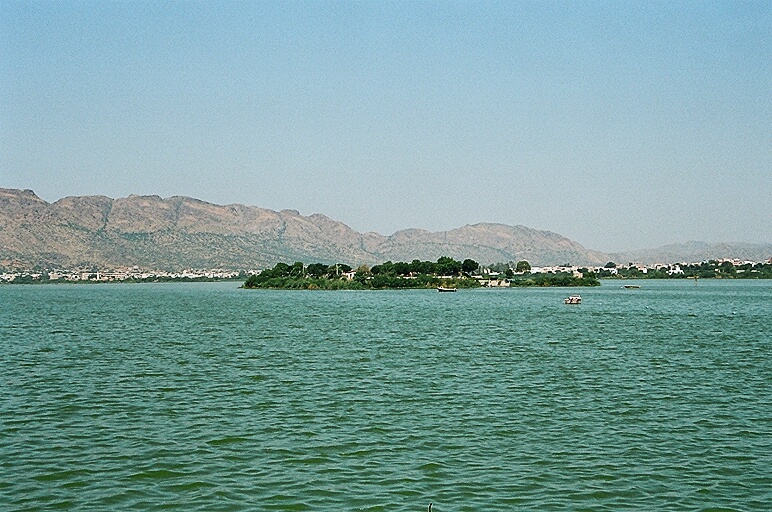
An island rests at the centre of the lake, reachable by boat. Hire a boat from the east side of Daulat Bagh and drift across the water for a full view of the pavilions.
On the western bank, this garden is Ajmer's finest sunset point. It holds an Arya Samaj temple and honours Swami Dayananda Saraswati, whose ashes were scattered here.
Perched on the hill above the lake — once the British-era Lodha Residency — it remains one of Ajmer's principal viewpoints over the water.
Twin lakeside promenades where locals and travellers stroll at golden hour, capturing the Baradari and the sinking sun across the still water.
Photographs of the lake's timeless moods. Click any image to view it larger.
All photographs remain the property of their respective copyright holders and are used here for non-commercial heritage and educational purposes, with attribution.
Three generations of Chauhan kings shaped Ajmer — and the lake that bears the family's name.
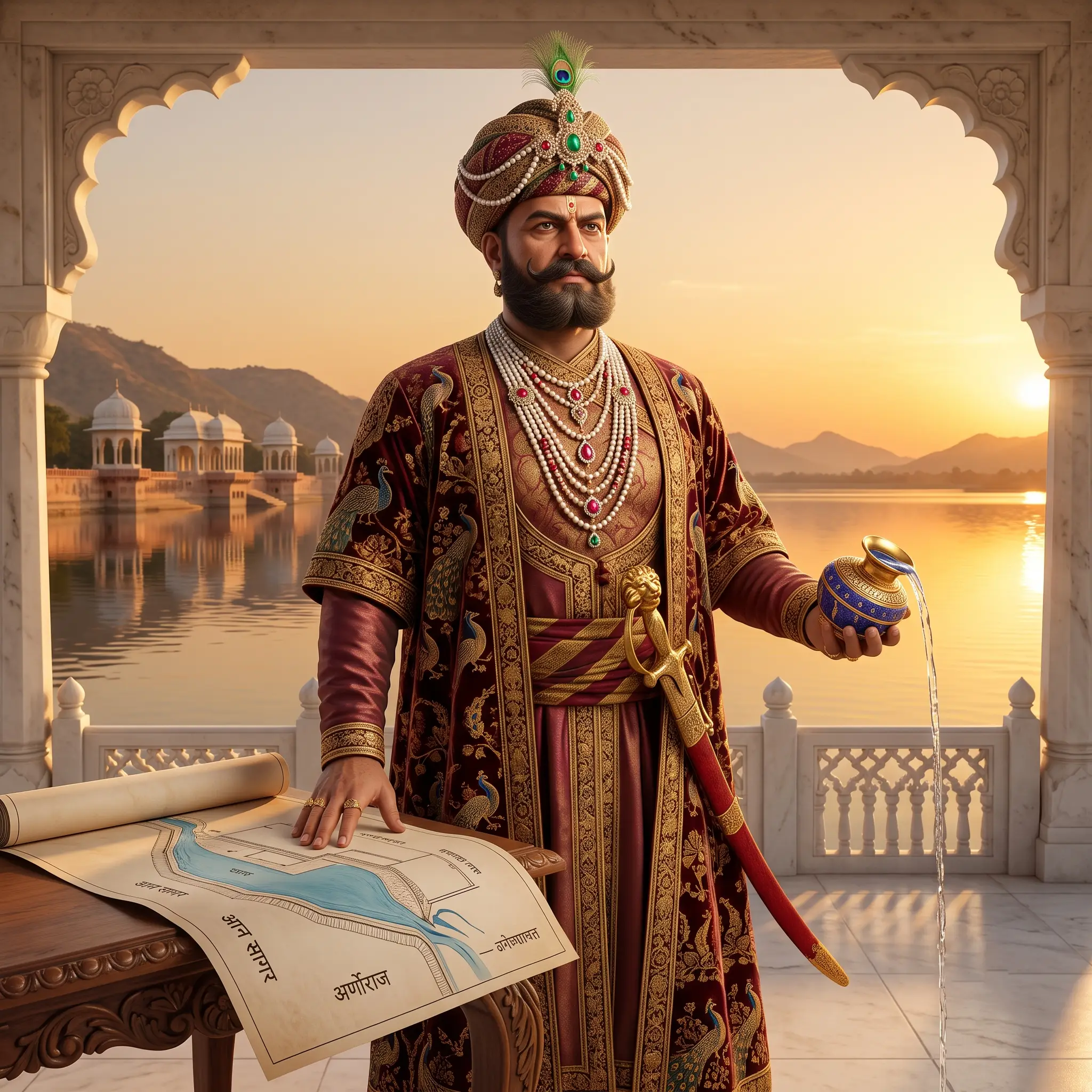
Grandfather of Prithviraj Chauhan and the Chahamana king who defeated the Turushkas near Pushkar and raised Ana Sagar Lake to purify the battlefield.
r. c. 1135–1150 AD
Born of the Chaulukya princess Kanchana and raised at the Gujarat court, Someshvara returned to rule the Chahamanas — and became father to the dynasty's most famous king.
Father of Prithviraj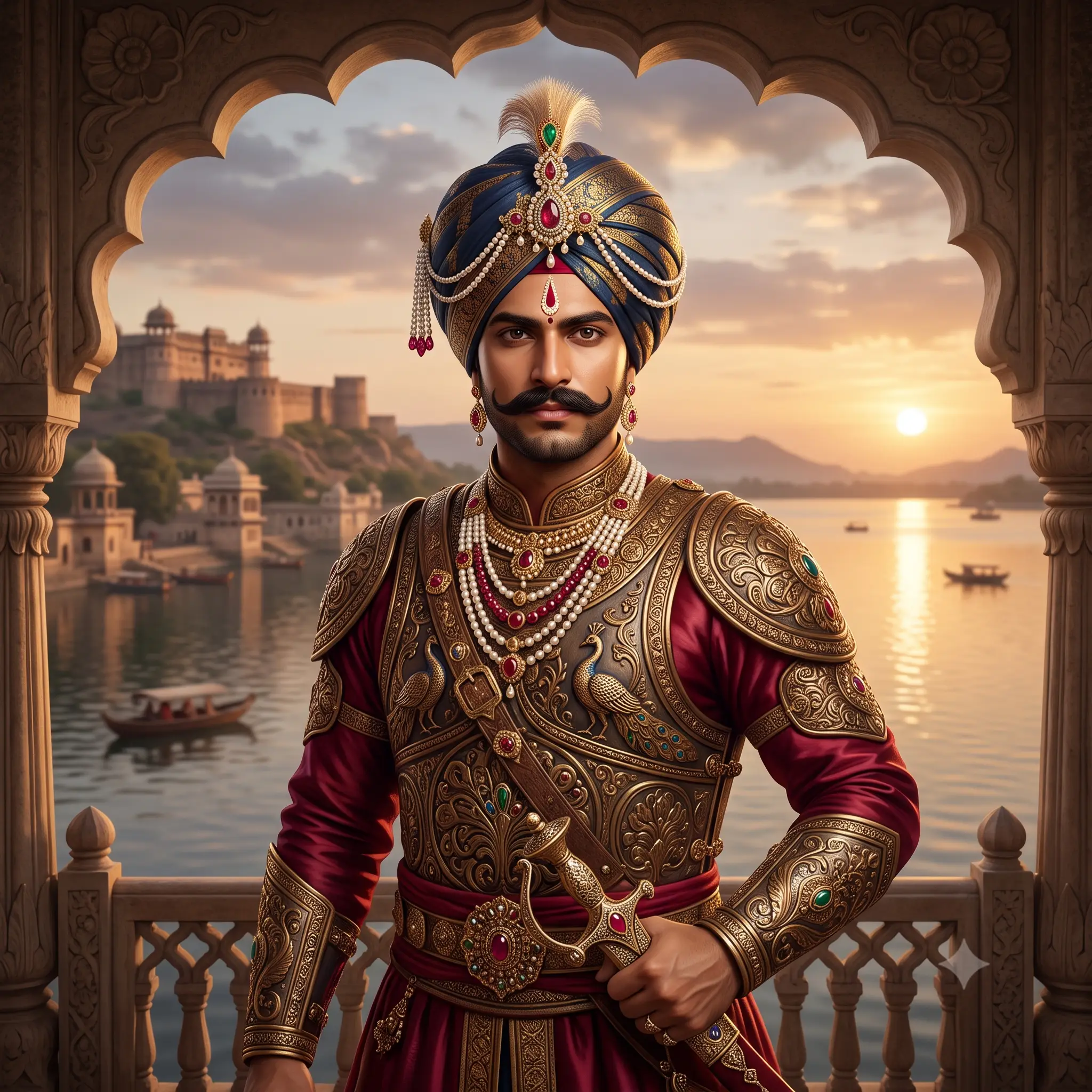
Prithviraja III (1166–1192), the celebrated "Rai Pithora" of Ajmer. The lakeside city he ruled was his capital, and his story is forever intertwined with the water his grandfather created.
r. c. 1177–1192 ADAna Sagar sits at the foot of the Aravalli hills, minutes from Ajmer's railway station.
October to March, when Ajmer's winters are pleasant. Come for sunrise or sunset — the golden hour over the Baradari is unforgettable.
Rate, review and follow Ana Sagar Lake on Google, and share your favourite view of the lake.
View on Google MapsQuestions about visiting Ana Sagar Lake, heritage details or corrections? Reach us directly using the details below.
This website is a community heritage project to share the story of Ana Sagar Lake with the world.
It is managed by Rohit Chouhan — a manager with roots in Rajasthan.
Found a correction or have heritage material to contribute? We would be glad to include it, with due credit.